Zero Online Presence
The hotel had no website, no booking platform, and no way for potential guests to find, research, or contact the property online. Every competitor was discoverable; WinchesterLK was not.
 UI/UX Case Study — Hospitality
Luxury Hotel · Nuwara Eliya, Sri Lanka
Building the first-ever digital presence for a luxury hilltop retreat — from zero to a fully responsive website with room booking, brand identity, and guest experience design.
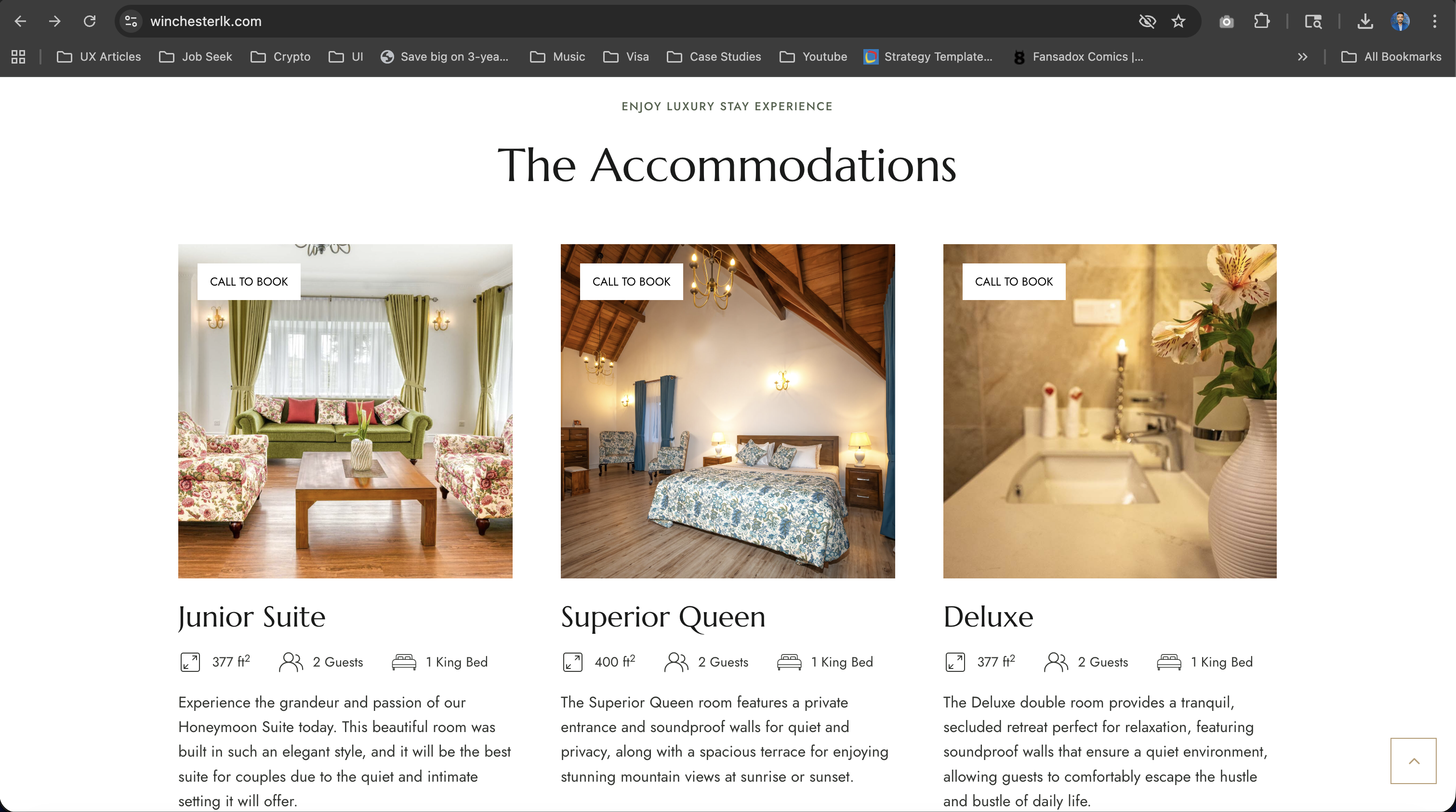
WinchesterLK is a luxury boutique hotel nestled in the picturesque hillside landscapes of Nuwara Eliya, Sri Lanka. Offering a Honeymoon Suite, Superior Queen, and Deluxe Double rooms, the property positions itself as a premium escape focused on serenity, natural beauty, and personalized guest experiences.
When the client approached Asanka Palle, the hotel had no digital presence whatsoever — no website, no online booking capability, and no way for potential guests to discover or engage with the brand. The project scope covered everything: brand identity, logo design, UI/UX, and full development.
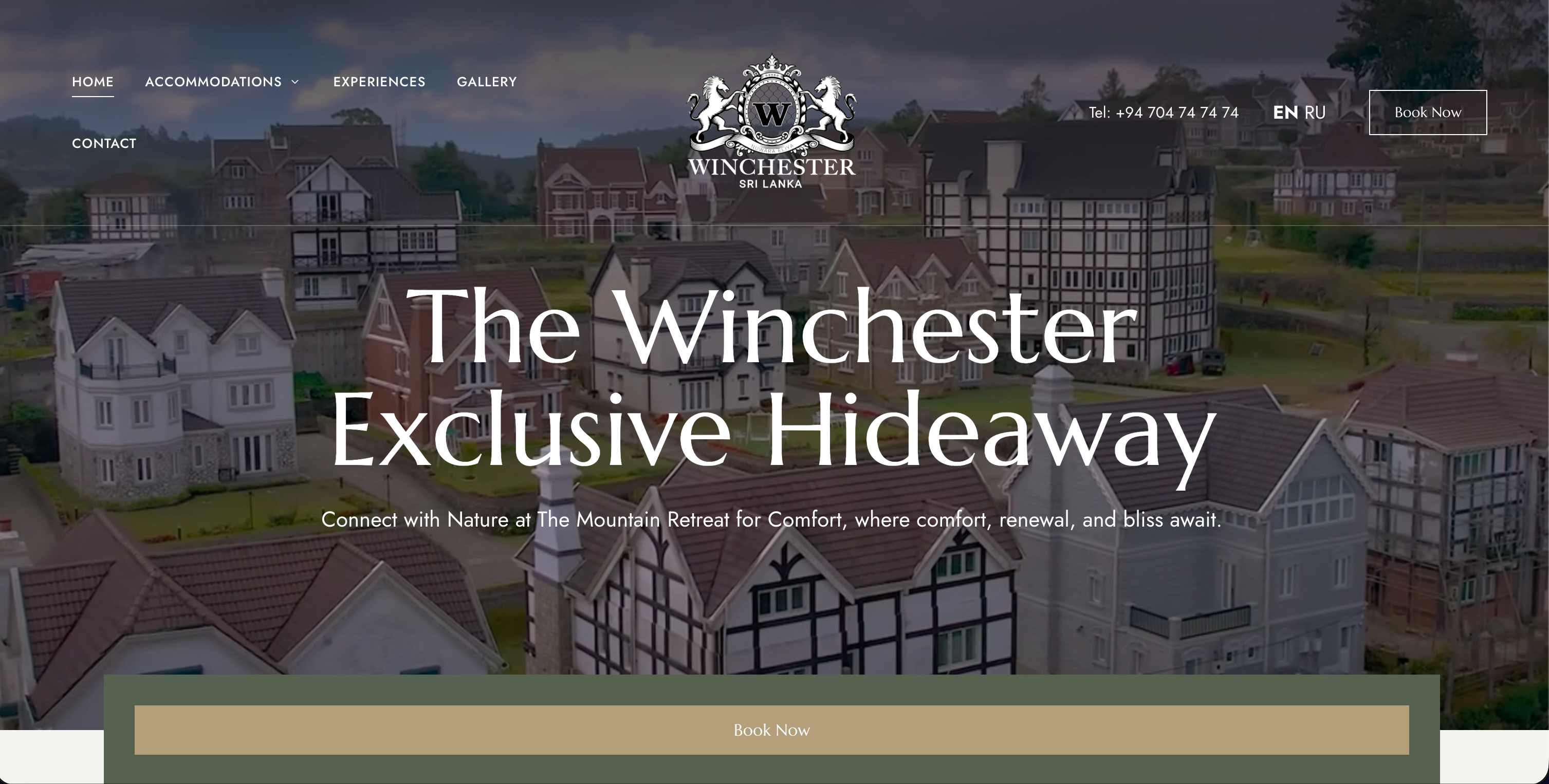
WinchesterLK had no digital footprint at all. In the modern hospitality landscape — where over 80% of hotel bookings begin online — this was a critical gap. The hotel was invisible to potential guests, unable to compete with other Nuwara Eliya properties, and entirely reliant on word-of-mouth referrals.
The hotel had no website, no booking platform, and no way for potential guests to find, research, or contact the property online. Every competitor was discoverable; WinchesterLK was not.
With three distinct room types each offering premium amenities, there was no platform to visually present rooms, pricing, or availability to drive direct bookings.
The property had no logo, no visual identity, and no established brand language. Guests had nothing to emotionally connect with before or after their stay.
| Dimension | Before | After |
|---|---|---|
| Online discoverability | None | Fully indexed website |
| Room booking | Phone / word-of-mouth only | Online booking form |
| Brand identity | No logo or visual system | Full logo + style guide |
| Guest information | Not available digitally | Comprehensive rooms & amenities page |
| Mobile experience | N/A | Fully responsive across all devices |
The WinchesterLK website needed to serve three distinct user types with very different needs, all arriving with high expectations of a luxury experience.
Three comparable luxury boutique hotel websites in the Sri Lanka hill-country market were analyzed to identify UX patterns, gaps, and opportunities.
| UX Feature | WinchesterLK | Heritance Tea Factory | Amaya Hills | Ceylon Tea Trails |
|---|---|---|---|---|
| Immersive hero with image | ✅ | ✅ | ✅ | ✅ |
| Individual room detail pages | ✅ | ✅ | ❌ | ✅ |
| Online booking / inquiry form | ✅ | ✅ | ✅ | ✅ |
| Mobile-first responsive design | ✅ | ⚠️ Partial | ✅ | ⚠️ Partial |
| Guest verification / trust signals | ✅ | ❌ | ❌ | ✅ |
| Amenities & services detail page | ✅ | ✅ | ✅ | ✅ |
"Competitors with partial mobile support created friction for the majority of travelers who research and book on phones. WinchesterLK's mobile-first approach was a direct competitive advantage."
The site architecture was intentionally kept shallow — no more than 2 clicks to reach any destination — to reduce friction for guests in discovery or booking mode.
Why single-level navigation? With a boutique hotel of 3 room types, a deep nav hierarchy adds cognitive load without value. Guests care about: "What rooms do you have? What's included? How do I book?" — the IA answers those in one scroll.
Four core feature areas were identified and designed to address the hotel's specific guest experience goals.
A seamless room inquiry and booking form accessible from every page via a persistent CTA button. Designed for mobile-first with minimal fields to reduce abandonment.
Dedicated detail sections for all 3 room types — each featuring room highlights, amenity icons, and a direct booking CTA.
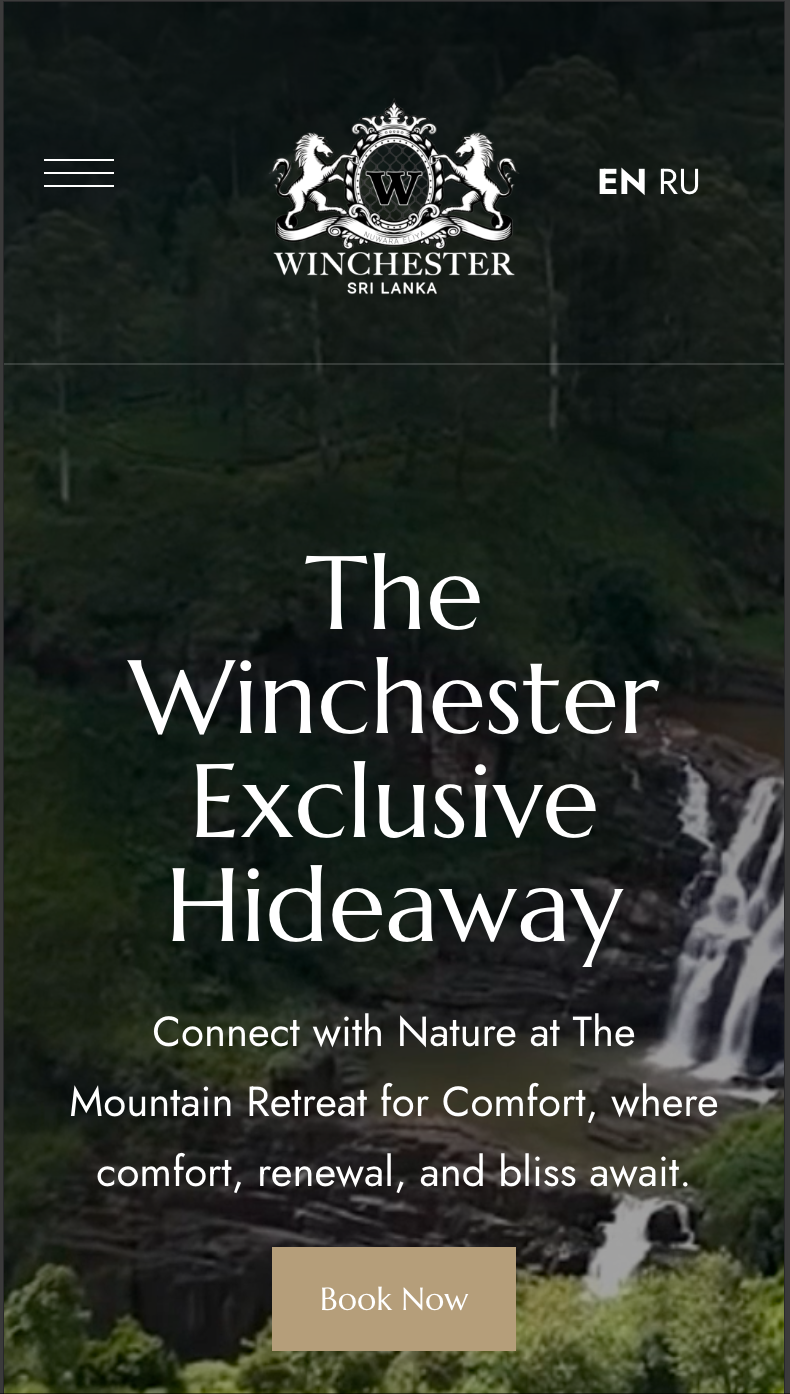
The entire site was built mobile-first, ensuring a seamless experience across phones, tablets, and desktops — critical given that 70%+ of travel research happens on mobile.
A dedicated section showcasing social proof — guest testimonials, star ratings, and property credentials — to establish trust for first-time visitors who cannot physically inspect the property.
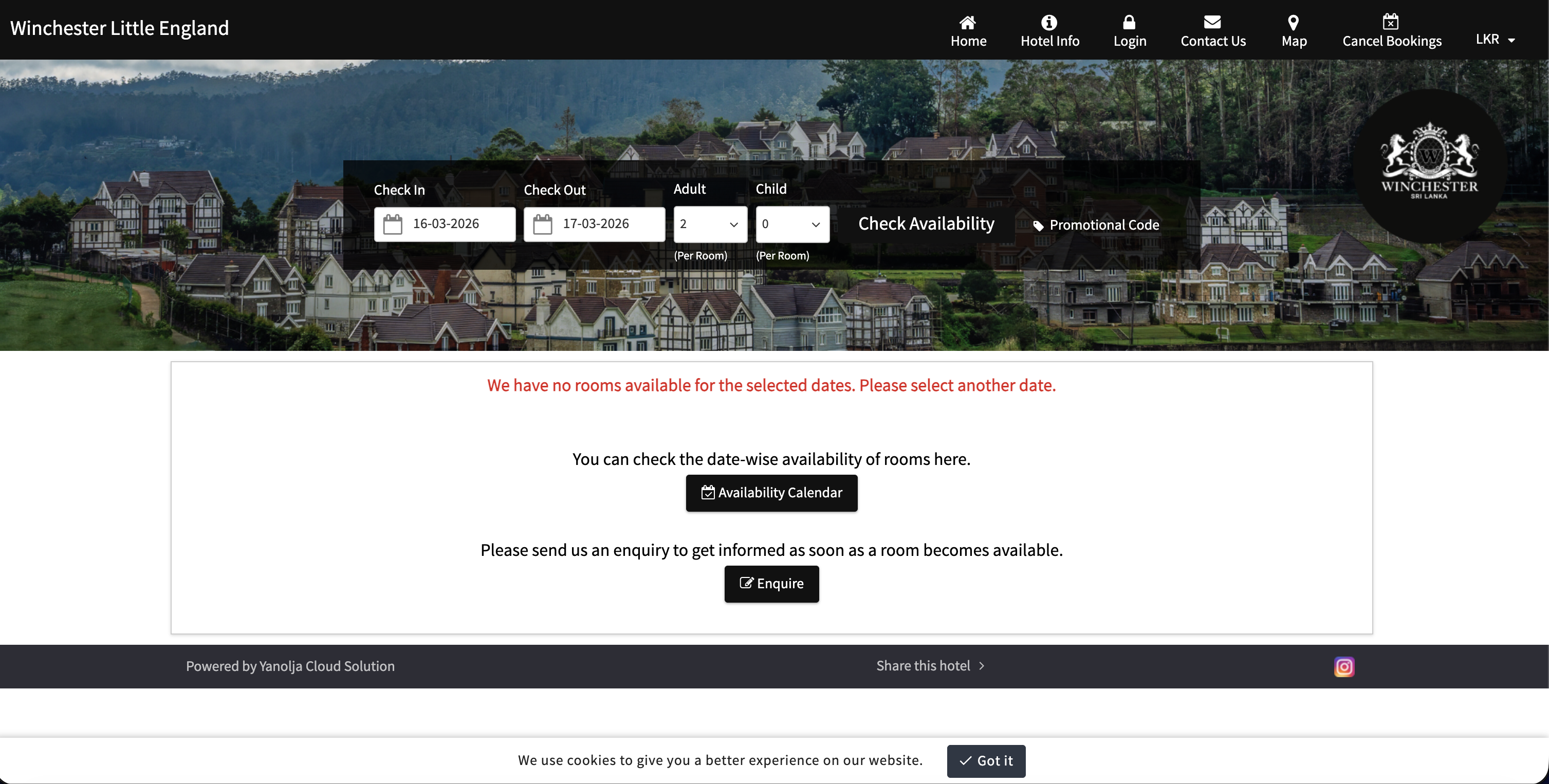
The booking system is powered by Yanolja Cloud Solution — a professional hotel management platform. When a guest submits a booking request on the Winchester website, the request flows through Yanolja's system, which simultaneously notifies the hotel and synchronises availability across all major travel platforms in real time.
Asanka designed the complete brand identity for WinchesterLK from scratch — including the logo, color system, and typography — establishing a visual language that communicates luxury, nature, and tranquility.
The WinchesterLK logo was designed to evoke heritage and luxury while remaining clean and scalable across digital and print. The wordmark uses a refined serif letterform with a custom "W" monogram that works as a standalone brand icon.
The mark is designed to hold weight at favicon size (16px) as well as large-format print — a critical requirement for a hospitality brand that lives across signage, stationery, and digital surfaces.
The palette was built around the hotel's natural environment — warm golds echoing the sunrise over Nuwara Eliya's hillsides, deep neutrals grounding the luxury tone, and a rich burgundy as a heritage accent.
60% Background & surfaces · 20% Text & content · 10% Gold highlights, CTAs & icons

When you are the designer, developer, and brand strategist all at once, every decision connects. Choosing a color is also choosing a code variable. This project sharpened systems thinking across the entire design-to-code pipeline.
The temptation in hospitality is to use every tool — animations, gradients, bold colors. The breakthrough insight was the opposite: luxury communicates through what you leave out. White space and a disciplined palette outperformed visual complexity.
Hotel guests make booking decisions emotionally within seconds of landing. Every design decision — hero image, headline, CTA placement — had to answer: "Does this make me want to stay here?" before anything else.